Mythos & Marginalia

life notes; flaws and all


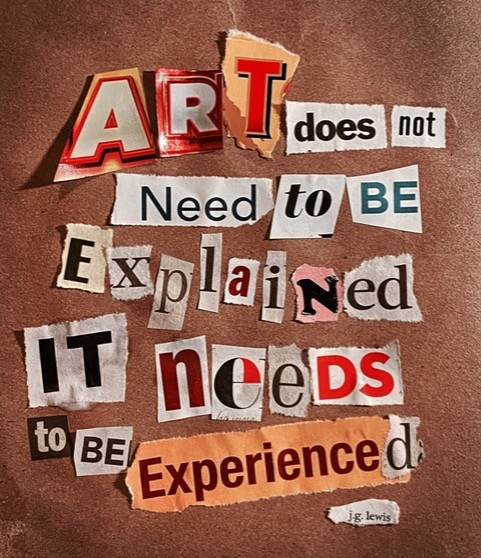
  • the art of retirement

    A week ago, I entered a new chapter of my life.

    I retired. Officially retired.

    I am now a retiree, a pensioner; and it’s taken me a few days to wrap my head around all that, even though I’ve had all these years to prepare for it.

    Retired: I am looking forward to what is ahead of me; I’m actually using the term “rewired.” This is the time to rethink how my life is progressing, and to retry and relearn what I want, as I will no longer respond to bosses, mangers, company directives, corporate bullshit and the deadlines and pressure of it all.

    I can now do what I want.

    I am readjusting my life to suit me. Surely, I will alter some of my fundamental ways, routines, and priorities.

    They always say you should plan, well in advance, for retirement.

    Decades ago, at a retirement party for an older co-worker, dinner conversation turned to what those around the table were planning to do in their retirement years. The celebrating retiree taking up woodworking (our gift to the man was a specialized tool he was always talking about). Most of the dinner guests wanted to travel, or had plans to spend time on new hobbies or those they didn’t have time for during their working years.

    When the question was asked of me, at first, I didn’t have an answer. Then, in my thirties or early forties, I hadn’t given it much thought; retirement seemed so far off.

    One of the guests continued to press for an answer. He surmised that I was already a writer and a photographer, so there must be another artistic pursuit in my future.

    I replied “painting… I plan to paint.”

    The answer didn’t really surprise anyone, or there wasn’t a wholehearted response, until I added “nudes”. 

    Yes, I said, “When I retire, I’m going to paint nudes.”

    Ha, ha, ha; laughter filled the room. But I wasn’t joking. I truly planned on painting when I retired, and nudes seemed like a wonderful subject matter; maybe even more because of the almost mocking response.

    So, for decades, I’ve been holding this out as a retirement goal.

    Almost 10 years back, while in Toronto, I joined a sketch group where we would meet weekly for life drawing sessions; timed poses with a live model. Aways an enjoyable evening, it was a chance to gain greater perspective on both my skills and talents, and the human form.

    When COVID hit a while later, our life drawing sessions were abruptly cancelled and the group disbanded.

    It was during the COVID years that I had the time to get back to painting.

    As a teenager I had taken oil painting classes but they, then, were more than frustrating for me. I already painted in watercolour, but oil paint took more time, study and preparation. Oil paints get a little messy and I, as a somewhat restless teen, found oils were nowhere near as immediate as watercolours. I was too impatient. So, I put the pursuit on hold, perhaps until I was an adult.

    It was 2020 when I felt I was adult enough to take on the medium. With the onset of the coronavirus, I suddenly had the time. Even then, I told myself it was more to familiarize myself with the tones and temperament of oils paints (I still find them messy). I studied colour theory (again) spent more time working on undertones and underpainting and pursued the practice as a means of getting ready to paint nudes. I’ve got pages and pages of sketches to work from and will soon, again, work with live models (if you are interested in sitting for a session, send me an email; I’m looking for all ages, gender and body types).

    When I moved back to Winnipeg last year, in preparation for my retirement years, I also joined a local printmakers group with a well-equipped studio. My plan is to use photography in the silkscreen dimension, and I have a few projects planned. I may even incorporate nudes.

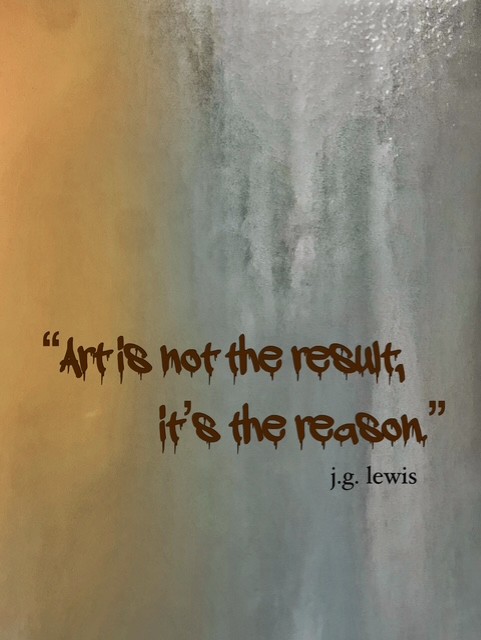
    The important thing for me, when I joined the group, was to get ready to make art. I will make art a greater priority in my life. That is my retirement plan.

    Yes, in the grand scheme of things, art will direct where I go and what I do during my retirement years. I can’t think of a more fulfilling objective.

    The pursuit of art, and its many forms, will give me a focus in retirement. Again, I’m not thinking of it as being retired, but “rewired’. Going forward I will change my thinking away from deadlines and commitments, and my performance will be personal and its results more tactile.

    From now on, for me, it is all about art. More so, the art of living.

  • solidly shifting

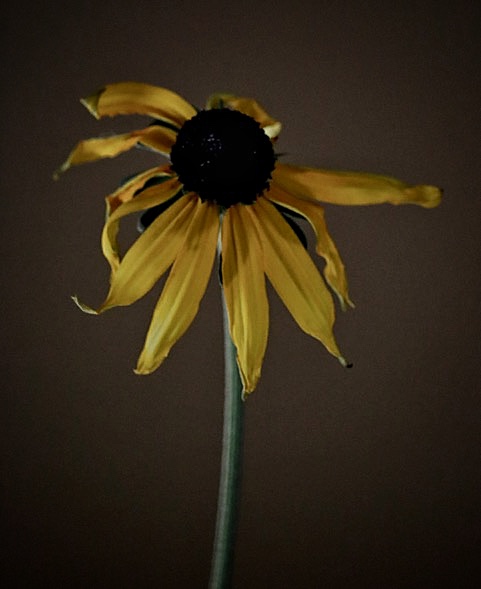
    We exist, standing up to what life throws at us, strong and purposeful. Dwellings: our bodies, like our houses, need constant attention and regular maintenance.

    Should we fail to keep up with the demands and rigours of daily life, the neglect will surely show. We just don’t know when. We all have a lot of stuff inside, and so much happening all around. Many times, we get all caught up in day-in-day-out pressures that we don’t notice the disintegration until it is too late.

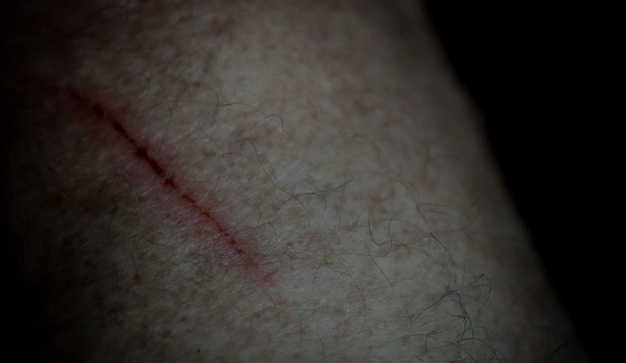
    Scratches and scuffs on the exterior are not always a sign of something ailing inside. Often, we are too busy to notice the force placed on our dwellings by the environment. Change is not always obvious.

    The structure of our lives is solidly shifting. It is slightly unnoticeable, until something happens to push everything aside so we can care for an unexpected, yet immediate, priority.

    Pay attention to the warning signs. 

    Address the cracks in your foundation before a major repair is required.

  • limited lifespan

    I popped into the camera store a month back to pick up a spare battery for my camera. I was going on vacation for a couple of weeks and, not knowing exactly where I’d be able to charge up my gear overseas, a second power source seemed like a pragmatic idea.

    I ended up purchasing the last of this specific battery that was in stock on clearance; it seems the manufacturer is doing away with that type of battery.

    It is a sign of the times.

    My camera is barely a few years old; at that time the most current model with features I still have not yet figured out, or do not require. Quickly, it is becoming outdated, as is most technology now.

    Decades back, camera batteries were fairly standard. They were not rechargeable but lasted quite a while and were readily available. At that time, a small battery controlled only the light meter and, maybe, the shutter. The then-bulky motor drives to advance the film relied on a battery of standard AAs (pardon the pun) and there was never a shortage of those.

    I’ve got cameras, both analogue and digital, that are decades old and still function well. No, they do not have the most advanced technological features – one of the cameras has none – but the cameras did exactly what they were supposed to do. They still do.

    Cameras, like any computerized technology available today, are not meant to last forever. There is a built-in obsolescence; it is the way they make things nowadays. Every year there are new models, and new features, and a new type of power source to operate the equipment.

    The art, craft and practice of photography is fundamentally the same: essentially the capture of images. However, there are limits in terms of how long the equipment will last. Like our laptops, tablets, and mobile devices, the operating systems of the computers have a somewhat predetermined lifespan. A camera now will become outdated long before the images will ever fade.

    Sadly, we live with it; hell, we put up with it.

    Nothing lasts forever; well, not the equipment. Yet my love of photography sustains me and will for much longer than the camera. My love of photography is timeless.

  • greater patience

    We all have limitations. At times these limitations are obvious, or so subtle you do not realize they are constraints until you are partway through a task.

    Limitations come with age; I’ve been feeling that lately. Not always, or not often, but I do feel it. 

    I am growing older.

    I will reach a milestone birthday this week. It is an age that, as a teenager, I couldn’t imagine reaching or being. Friday, I turn 65. That’s old . . . at least, that’s what I used to think when it seemed so far off.

    Now, it is here, and I accept it as an age I will be. 

    Or maybe I realize that the age, and the aging process, is far better than the alternative. I don’t want to think about that, even less than I want to think about aging. But I am. 

    I am growing older; it has become obvious to me.

    These past months, a task that even a year ago I did not feel was difficult turned into a challenge. Interior painting is something I have done, often, over my lifetime. In fact, household painting was something I felt I was good at; the results seemed to prove it.

    There are also the regular tasks involved in home improvements that I have learned over the years, and they are becoming a little more trying. I am (or have become) relatively handy with the hammer and nail (and all the sawing and drilling and measuring and elemental steps involved). Recently, however, these projects have not been as easy as they once were. 

    I don’t seem as steady, or as strong, as I used to be. 

    It now takes me a little more effort, a bit more thought, and a few extra days for my projects to become a reality.

    Recently, it seems, it’s not only about taking time, but I also need a bit more assistance to get through my planned undertakings. I have had to, occasionally, ask for help. That is somewhat frustrating for someone who considers himself relatively independent.

    I used to think I got better with age. Now I am not quite as sure.

    I’m not as young as I used to be, and I am reminded daily. I require greater patience. I need to take my time and do so knowing I have less of that ahead of me than I once did. That is my reality.

    My Mom used to tell me I could do anything I put my mind to, so I’ve always kept this in mind as I’ve passed through this life. After six decades plus, I have become pretty good at some things by studying, practicing and trying. I’m a big proponent of learning as I go. I have learned a lot over my lifetime.

    Much of the time I can do not only what I want to do, but also what I must do. Now it just takes more time than I thought I had. I suppose patience is being forced upon me.

    Maybe that’s one of those life lessons I have learned gradually. Patience requires time. Perhaps I am finally at the age where I can accept that.

  • beyond words

    To travel halfway across the world and not visit the Louvre Museum would be senseless. The museum is on all the “must-see” list of destinations if you are travelling to Paris, right up there with the Eiffel Tower and the Notre-Dame Cathedral.

    Of course we went. Actually, the Louvre was the first tourist destination we saw. You can’t go to Paris and not see the Louvre: how many times in my lifetime had I been told.

    To visit the Louvre is about waiting. We paid in advance for a museum pass that would allow us access to any number of museums and galleries in the Paris. The Louvre was one of the few that required a time-entry. We were slated for 11 a.m. Along with a huge mass of humanity, we began lining up well more than an hour before.

    During this waiting period, you are allowed all that time to marvel at the historical and architectural gem and the stunning glass pyramid that marks entry to a journey of art and culture.

    What one must remember about the Louvre is that it is a museum and not an art gallery. Yes, there is art – plenty of art -from textiles to sculpture and, of course, paintings. What one must remember about the Louvre is that it is more an example of time that has past and is laid out in such a fashion that you must walk through the eras.

    It is not quiet as a gallery is more prone to be. It is filled with people (all those people who had lined up ahead of me) and there are lots of people there more to see the museum than a gallery. Art, at the Louvre, is viewed more as history than it is art. The Louvre Museum is presented more by era than by style.

    I was, throughout the morning, impatient.

    Let’s face it: I was there to see the Mona Lisa. How many times, in my lifetime, had I been told that I had to see Mona if I were ever to go to Paris. 

    The painting is important to the Louvre: it might be the only reason some people go the museum. There are endless signs throughout the amazing structure marking the way to “Mona Lisa” (Room 711 of the Denon Wing). It seems you must walk miles through all those people. 

    Mona Lisa itself is iconic. A Renaissance portrait pained by Leonardo da Vinci between 1503 and 1519. Shrouded in a deep sense of mystery, Mona Lisa is celebrated for her enigmatic smile.

    The Mona Lisa is larger in legend than she was in size (30 x 21 inches). Wikipedia lists the Mona Lisa as “the best known, the most visited, the most written about, the most sung abut, (and) the most parodied work of art in the world.” It is so.

    The Mona Lisa is beautiful beyond words. I’m not sure I could describe her as wonderfully as those before me have, but she is more than memorable. Beyond words. No, I did not get as close to her as I would have liked. Even after I tried to inch further into the crowd ahead of me, I knew I would never come within conversational distance.

    All I could do was bask in her smile and admire the work as it seemed like thousands of people passed by, each one lifting a cell phone to capture the moment. I did, and the moment is full of people, and cell phones, and Mona gazing beautifully at her admirers. I was one of many.

    Mona Lisa was well worth the trip.