This global economy affects more than it ever
     has before. No surprise, the prices rise.
          We live with it. We must.
          Where are we headed?
     Good times are sold, bought up by the highest bidders
     in an attempt to stoke egos and excitement.
     Pride has been co-opted by mass merchandisers of luxury
     automobiles and designer goods.
          Built-in obsolescence is a standard of production for
     products we don’t need but desire.
          Then, there are those of us who have none, unhoused
     and incapable of making it on their own.
     Sullen circumstances are a paycheque or two away
     from a reality most of us refuse
          to acknowledge.
I don’t think I am a “perfectionist,” but I do have expectations of what I can, could, or should be doing; particularly when it comes to my art.
I struggle with it. Many times, my intentions do not line up with expectations.
I want to do more.
I know I can do more.
I know I need to take more time.
I officially retired some months ago. For many years I nurtured a retirement plan to create, to make art, to improve and expand upon skills and talents I have spent a lifetime developing.
It is personal to me.
Through the years I have attempted to continually learn more and develop what I can do. I does not always come naturally. This week I am, again, embarking on an attempt to redefine another facet of my art; it is what I do.
Yesterday, before I got started on my next artistic adventure, I completed an oil painting I have been working on for almost a year. It has not been continual labour; I’ve been working on the piece as time, or life, allowed. Progress has not always been easy (or enjoyable), but there has been some satisfaction as I worked my way through the process.
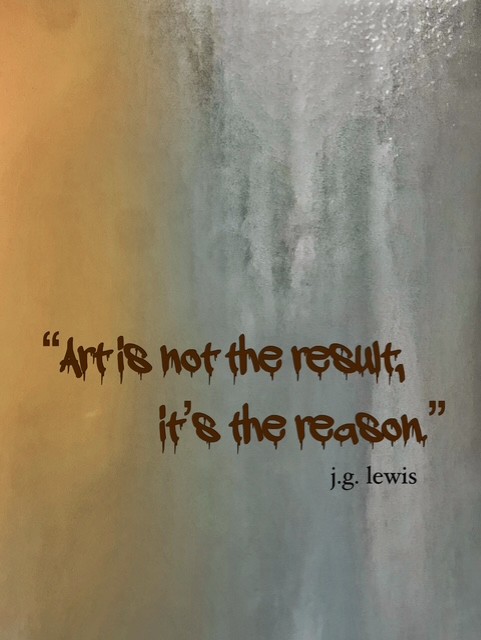
As I finished up the final layer of glaze last evening, I was reminded of something I wrote way back in 2015. Yesterday, it made more sense to me.
“Art is not the result, it’s the reason.”
Completing this one piece of art reminded me that, perfection be damned, I have so many more reasons to keep going.
Could be the third week of August; at times, earlier. It hurts. You feel it. It’s that time of the year; summer is, again, nearing its end.
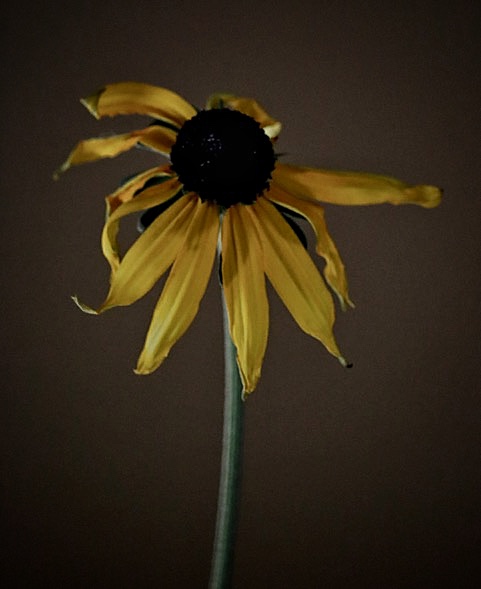
Now, calendrically, there is still a good month left to the season, but the signs are showing up now. Naturally. Last night the thermometer dipped to single digits. All those events you had lined up over the summer are done. Most of the produce has been picked from the garden, and the flowers don’t boast that friendly same fresh appearance.
As a Gemini, summer is the first season I experienced. My childhood memories are full of summer: bikes rides, sailing, water skiing, days at the beach (because the beach was right there). Family vacations, camping our way across Canada; sweltering in the family station wagon in the days before air-conditioning. My first summer job, and the one that followed; my 17th summer remains one of my most memorable. Decades later, as a parent, I shared many similar memories with my daughter.
I believe my life is marked by summer. It is, or has always been, my season. Mid-August, to me, has always marked its end.
As a kid, even a teenager, it was knowing you were going back to school in a matter of weeks. You tried, especially as a teen, to squeeze a little more life into summer, staying up later, pushing the boundaries of your curfew or lamenting that baseball season was over.
Summer is a feeling, more than a season.
Now, as a full-fledged adult (I recently celebrated my 65th summer) I’m feeling it a little more. There is less to look forward to: no new classes, no new back-to-school wardrobe. Yes, it has been like this for a couple of years, but it hits a little harder, as a senior citizen, this year.
These past couple of days I’ve been rather lethargic, even unmotivated. I’ve struggled to even do the stuff that I enjoy doing.
For the longest time I’ve associated Seasonal Affective Disorder (SAD) with winter but for me, I can feel there is a tinge of depression that comes with the end of summer. I’m even feeling it a good month before it happens.
Yes, right now, I am stuck in the sadness of summer.